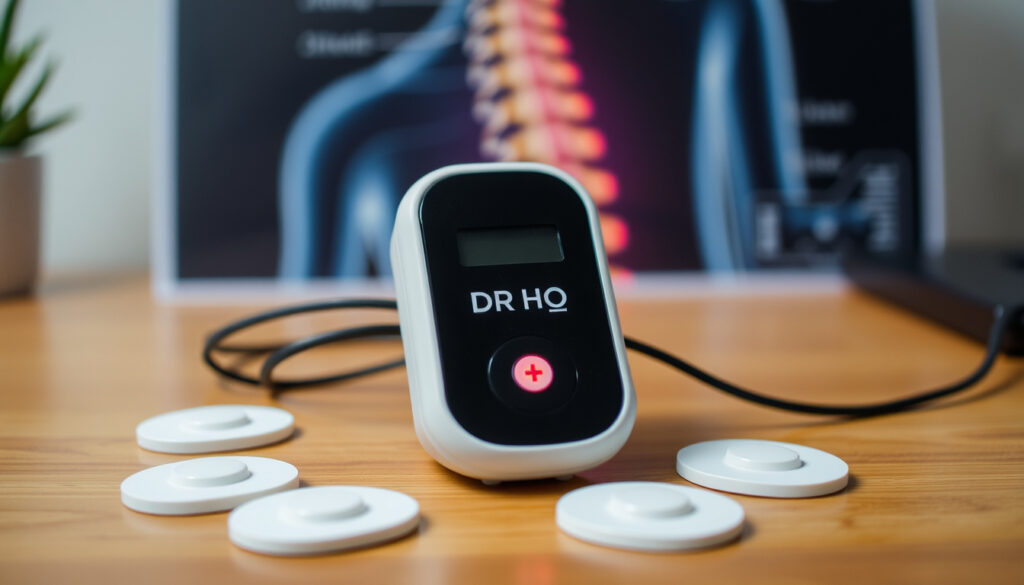
Dr Ho Pain Relief Devices: Do They Really Work
Anyone who’s shopped for a home massage device has likely stumbled across the name Dr. Ho. The brand, founded by Canadian chiropractor Dr. Michael Ho, markets its line of electrical stimulators as a drug-free answer to chronic pain. But as the at-home therapy market fills with new options, a crucial question hangs in the air: do these devices deliver on their promise, or are they trading more on reputation than results?
Years of clinical experience: over 30 · FDA registration: FDA registered as a medical device · Customer reviews on Trustpilot: mixed, with average ~3.5 stars · Primary technologies: TENS & EMS combined · Price range (MotionCiser FIT): €229–€250
Quick snapshot
- Dr. Michael Ho is a registered chiropractor (FSA Store (health savings account retailer)).
- DR-HO’S devices are FDA registered as medical devices. (FSA Store (health savings account retailer))
- Products use a combination of TENS and EMS technology (DR-HO’S product overview video (brand marketing channel)).
- Clinical efficacy of specific DR-HO’S branded devices beyond general TENS research.
- Total units sold or long-term user satisfaction data.
- Exact company headquarters location (only “Canada” is publicly stated).
- Brand founded in the early 1990s by Dr. Michael Ho (DR-HO’S product overview video (brand marketing channel)).
- No major public recalls or FDA safety alerts associated with the brand as of 2025. (DR-HO’S product overview video (brand marketing channel))
- Increasing competition from clinically-studied alternatives like Revitive.
- Growing consumer demand for independent, verifiable clinical data before purchase.
The brand has been on the market for three decades, but key details about its regulatory standing and clinical validation remain surprisingly hard to pin down.
| Attribute | Value |
|---|---|
| Founder | Dr. Michael Ho (chiropractor, Canada) |
| Founded | early 1990s |
| Headquarters | Canada (exact city not publicly confirmed) |
| FDA Status | FDA registered, not approved |
| Key Technology | TENS & EMS combo |
| Trustpilot Rating | ~3.5 / 5 (as of 2025) |
What Is Dr. Ho’s Known For?
DR-HO’S core product line
- MotionCiser: A leg and foot massager combining TENS and EMS.
- MotionCiser FIT: Adds resistance bands for simultaneous exercise.
- Back & Neck Pain Relief Bundle: Targeted pads for upper back and neck.
- Circulation Promoter: Focuses on increasing local blood circulation in the legs and feet (FSA Store (health savings account retailer)).
The brand differentiates itself by packaging multiple electrotherapy modalities into a single consumer device. While many TENS units focus purely on pain signal blocking, DR-HO’S adds electrical muscle stimulation (EMS) to promote muscle performance. This dual-approach marketing aims at users who want a comprehensive home therapy station rather than a single-purpose gadget. The implication: DR-HO’S occupies a broad niche, aiming to be a generalist in a market of specialists, which can be a strength for variety but a weakness for targeted efficacy.
Dr. Michael Ho’s background
- Graduate from a chiropractic college in Canada.
- Over 30 years of clinical experience according to brand statements (DR-HO’S product overview video (brand marketing channel)).
- Founded the company with the goal of bringing clinical-grade pain relief into the home.
The brand leans heavily on its founder’s clinical authority as a chiropractor, presenting the devices as an extension of professional therapeutic knowledge. Independent verification of Dr. Ho’s specific credentials beyond general marketing claims remains limited to what the brand publishes.
Does Dr. Ho’s Really Work?
Mechanism of action: TENS and EMS
- TENS (Transcutaneous Electrical Nerve Stimulation) sends mild electrical pulses to block pain signals from reaching the brain.
- EMS (Electrical Muscle Stimulation) causes muscle contractions intended to improve circulation and reduce fatigue (Boots (UK pharmacy chain)).
The theory is sound. TENS therapy has decades of clinical backing for specific pain conditions, and EMS is widely used in physical therapy. DR-HO’S combines both in a single 30-minute session.
General TENS research does not automatically validate the specific device. The question isn’t whether the technology works, but whether DR-HO’S implementation delivers measurable outcomes for its price point.
Clinical evidence summary
- A peer-reviewed protocol exists for a competitor device (PMC / peer-reviewed article (independent academic research)) that studied a Revitive model over 8 weeks against a sham device — no equivalent public trial is available for DR-HO’S branded products.
- Customer reviews on Trustpilot (user review aggregate platform) and Walmart reviews (user feedback platform) report subjective improvements in walking ability and leg pain after several days of use, but these are anecdotal and uncontrolled.
- Brand statements claim relief from arthritis and muscle pain, but these claims lack third-party verification in published literature.
The pattern: DR-HO’S relies heavily on founder authority and general TENS science. Without a brand-specific clinical trial, the evidence base for its specific devices is significantly thinner than some competitors.
Customer review patterns
- Trustpilot reviews average ~3.5 stars, with praise for back pain relief and complaints about durability (Trustpilot (user review aggregate platform)).
- Amazon and HSN reviews are more favorable, frequently citing ease of use and immediate comfort.
- Common pattern: positive for one condition (e.g., back pain), less effective for another (e.g., knee pain).
The trade-off: You get the benefits of an established therapeutic technology in an accessible home device, but you are relying heavily on marketing claims and general science rather than conclusive brand-specific clinical data.
For consumers, the lack of brand-specific clinical trials means the decision relies on anecdotal reviews and general TENS science rather than proven outcomes.
Is Dr. Ho’s Device FDA Approved?
FDA registration vs FDA approval
- FDA registration means the manufacturing facility and device are listed with the agency — it does not imply the agency evaluated safety or effectiveness.
- FDA approval (or 510(k) clearance) requires a premarket review showing the device is safe and effective for a specific use.
This is the most common point of confusion in the pain relief device market. DR-HO’S devices are FDA registered, a standard requirement for any medical device sold in the U.S. The brand does not formally claim FDA approval for the efficacy of its pain relief across major retail channels.
Current status for DR-HO’S devices
- Official listings use the term “FDA registered” (FSA Store (health savings account retailer)).
- No FDA-approval claims are found on the brand’s website or major retailer listings (Amazon, HSN).
- Devices are classified as over-the-counter medical devices, not requiring a prescription.
A consumer who sees “FDA registered” may reasonably assume it means “FDA approved.” The difference is material: registration is a baseline manufacturing compliance, not a quality or efficacy endorsement.
What this means: Technically compliant, but regulatorily modest. The lack of a 510(k) clearance or PMA means the FDA has not independently weighed in on DR-HO’S therapeutic claims.
Who Should Not Use Dr. Ho’s MotionCiser?
Standard TENS and EMS contraindications apply to DR-HO’S devices. The following groups should consult a physician before use:
- People with pacemakers or implanted electronic devices: Electrical pulses may interfere with device operation.
- Pregnant women: Stimulation over the abdomen or lower back should be avoided unless explicitly cleared by a doctor.
- Individuals with open wounds, skin conditions, or active infections in the application area.
The principle: While DR-HO’S products are safe for most adults, anyone with underlying medical conditions or electronic implants should seek medical guidance to avoid complications.
Dr. Ho vs Revitive: Which Is Better?
Three major dimensions separate the two leading at-home electrical stimulation brands, and the differences often lie in clinical evidence and target audience.
| Feature | DR-HO’S | Revitive |
|---|---|---|
| Technology | TENS + EMS. Broader, less focused on a single mechanism. | Primarily circulation-focused EMS. Newer models add TENS. |
| Clinical Evidence | Brand-specific trials absent. Relies on general TENS science (Which? (UK consumer advocacy group)). | Peer-reviewed trial published for Revitive Medic (PMC / peer-reviewed article (independent academic research)). |
| User Feedback | Mixed on Trustpilot (~3.5). Positive on Amazon and HSN. | Very positive on ProductReview.com.au (4.6/5 from 396 reviews) (ProductReview.com.au (Australian consumer review aggregate)). |
| Primary Focus | Broad pain relief (back, neck, legs). | Leg circulation, swelling, muscle recovery. |
| Price Range | ~€229–€250 (MotionCiser FIT). | ~€150–€250 (varies by model). |
| Market Position | Legacy brand, 30+ years, strong TV presence. | Evidence-backed challenger, aggressive retail deals (Boots, Amazon). |
Revitive’s clinical evidence is notably stronger, backed by a published peer-reviewed protocol. DR-HO’S counters with a longer market history and a broader product line. For users focused purely on leg circulation and swelling, Revitive’s targeted models are well-documented. For those with generalized aches in the back or joints, DR-HO’S offers a more versatile system. The trade-off is clear: Revitive has a better-documented clinical backing for circulation, while DR-HO’S provides a broader, less-vetted therapy platform.
DR-HO’S MotionCiser Specifications
The specs of the flagship MotionCiser reveal a device designed for convenience, not necessarily clinical precision.
| Specification | MotionCiser | MotionCiser FIT |
|---|---|---|
| Technology | TENS + EMS + Heat/Vibration | TENS + EMS + Heat/Vibration |
| Target Areas | Legs & Feet | Legs, Feet, Arms (via resistance bands) |
| Programs | Multiple built-in programs | Multiple built-in programs |
| Pads | Reusable electrode pads | Reusable electrode pads |
| Power | Battery or AC adapter | Battery or AC adapter |
| Warranty | Standard (varies by region) | Standard (varies by region) |
| Price | ~€229 | ~€250 |
Pros and Cons of Dr. Ho’s Devices
Upsides
- Combines TENS and EMS in a single, easy-to-use package.
- FDA registered as a medical device.
- 30+ years of brand awareness and market presence.
- Positive reviews on Amazon and HSN.
- Multiple device options for different pain areas.
Downsides
- Lacks brand-specific independent clinical trials.
- “FDA registered” is easily mistaken for “FDA approved” by consumers.
- Mixed reviews on Trustpilot regarding durability and consistency.
- Contraindicated for users with pacemakers and pregnant women without physician consult.
- Higher price point compared to basic TENS units.
Clarity Check: What We Know and What We Don’t
- Confirmed facts
- Dr. Michael Ho is a Canadian chiropractor (FSA Store (health savings account retailer)).
- DR-HO’S devices are FDA registered as medical devices.
- Products combine TENS and EMS therapy (Amazon UK (retailer listing)).
- What’s unclear
- Whether the specific devices provide clinical outcomes superior to a basic TENS unit.
- Long-term durability and reliability data independent of brand marketing.
- Total units sold globally.
- Exact clinical outcomes in peer-reviewed settings.
What Users Are Saying
“Over 30 years of clinical experience, we’ve helped thousands find drug-free relief.”
— DR-HO’S brand marketing (DR-HO’S product overview video (brand marketing channel))
“Helped my circulation after sitting at a desk all day. Best purchase for leg health.”
— Verified HSN buyer (via product review platform)
“Worked for my back pain but didn’t do much for a chronic knee issue.”
— Trustpilot (user review aggregate platform)
“The Revitive Medic is clinically proven to actively improve circulation during use.”
— Boots (UK pharmacy chain)
Summary
DR-HO’S occupies a unique space: a legacy brand in a rapidly modernizing market. Its longevity gives it name recognition, but its lack of published clinical data puts it at a clear disadvantage against evidence-backed competitors like Revitive. For the typical buyer considering a MotionCiser, the decision hinges on a simple question: is comfort with a recognized brand name worth accepting a lower confidence in clinical outcomes? For the consumer who values rigorous proof over marketing longevity, the implication is straightforward: wait for an independent trial, or choose a device whose claims are grounded in published research.
trustpilot.com, pmc.ncbi.nlm.nih.gov, youtube.com, revitive.com, trustpilot.com, which.co.uk, amazon.com
Those considering a TENS device like Dr Ho may also benefit from reading a comprehensive buying guide for TENS machine in Australia to compare features and regulations.
Frequently asked questions
How does the MotionCiser compare to a regular TENS unit?
The MotionCiser combines TENS and EMS in one device, whereas a standard TENS unit focuses only on pain signal blocking. This makes it a more versatile but less specialized tool.
Can I use Dr. Ho’s devices while sleeping?
No. Like most TENS and EMS devices, they should be used during waking hours under direct supervision to ensure proper placement and avoid prolonged stimulation.
Is there a money‑back guarantee?
Yes, the brand often offers a money-back guarantee, but the terms vary by retailer and region. Check the specific purchase agreement before buying.
Do Dr. Ho’s devices require a prescription?
No. The devices are classified as over-the-counter medical devices and can be purchased without a prescription from retailers or directly from the brand.
How long does a typical session last?
Sessions are typically recommended for 15 to 30 minutes. The device includes built-in programs that auto-adjust the duration.
Are the electrode pads reusable?
Yes, the pads are reusable. However, the adhesive wears off over time and they need periodic replacement, typically after several uses.
Does Dr. Ho offer a warranty?
Yes. A standard warranty covering manufacturing defects is offered. Duration and terms may vary by region and specific product model.
Related reading: Normal Blood Pressure: What It Means by Age · Red Bull: What It Does, Ingredients, Health Effects, and More
More related posts
 David Caruso: Where Is He Now, Net Worth, and Why He Left Hollywood
 Dustin Wolf: Contract, Stats, Size, and Why He Was Drafted Late
 Kerry Washington: Biography, Children, Husband, and Career Facts
 Camila Mendes: Relationships, Baby, Ex-Boyfriend, Career & Bio
 Ghost of Tsushima PC: Release Date, Specs & Reviews
 Tim Robbins: Life After Shawshank and Sarandon
 Christina Koch: Record-Breaking Astronaut on Artemis II
 Dylan Cease: Stats, Biography, and Career Overview